
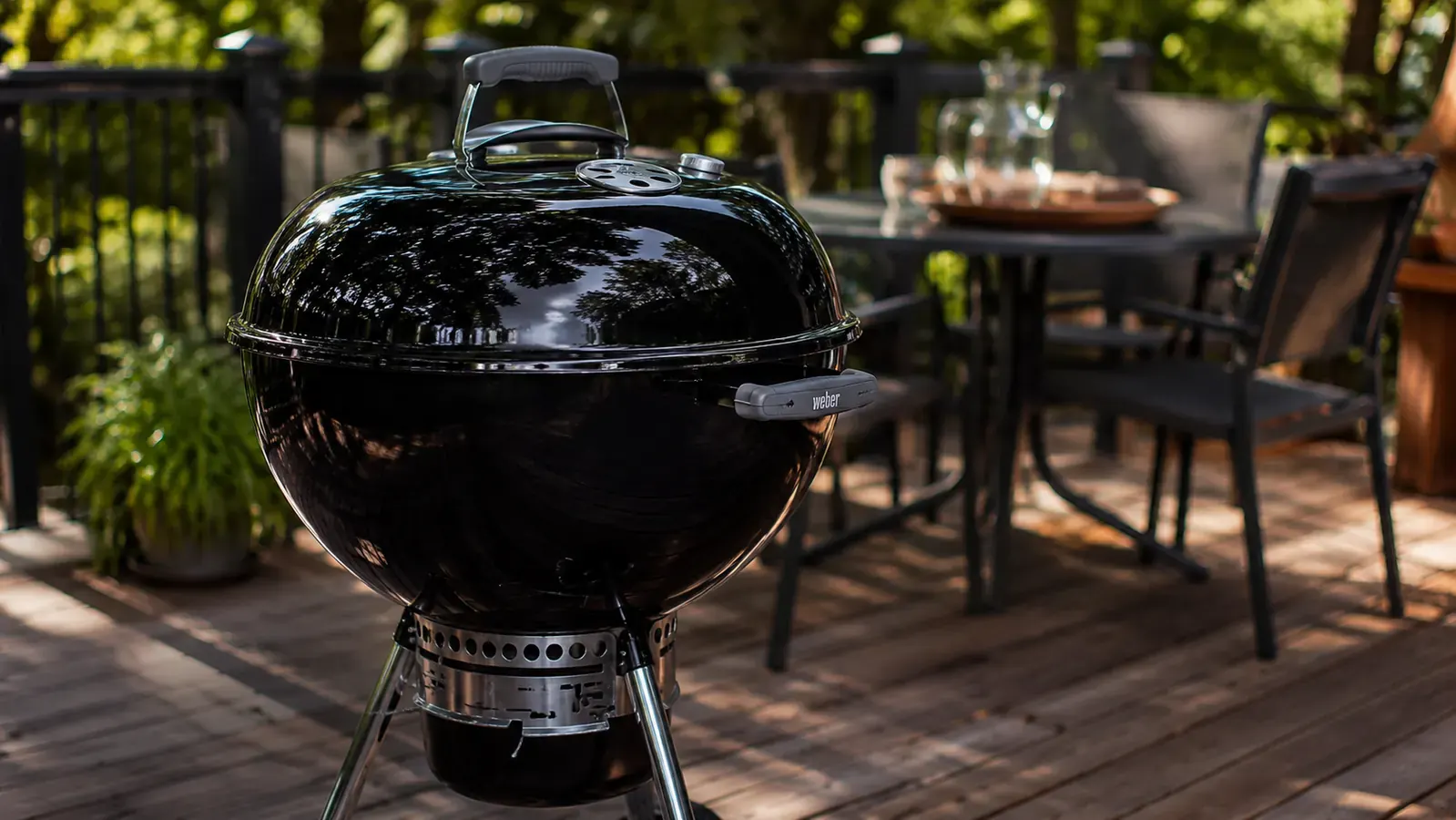
I almost talked myself out of buying this grill. Spent two weeks reading Weber kettle reviews online and could not find a single negative one. When something has a 4.8-star rating across more than 12,000 Amazon reviews and everyone says it is perfect, that should be comforting. For me it was suspicious. Nobody talks about a product that way unless they either love it uncritically or have not used it hard enough to find the edges. I wanted to know about the edges. So I bought the Weber Original Kettle Premium 22-inch (ASIN B00MKB5TXA), cooked on it through multiple seasons, and paid close attention to the things the five-star crowd tends to skip over. This is that report.
The short version: it is genuinely a great grill. I am not here to tear it down. But there are at least six things new buyers consistently get blindsided by, and knowing them upfront would have saved me some frustration in the first couple of months. If you want the comprehensive long-term performance story on this same grill, that is in our Weber Kettle long-term review. This piece is specifically about what the crowd glosses over.
The Quick Verdict
The Weber 22-inch Premium earns its reputation, but it has real gotchas that first-time charcoal grillers hit hard. Buy it knowing the lid thermometer lies, the ash catcher fills faster than you expect, and the cooking grate will need replacing sooner than the bowl will. None of that makes it the wrong call. It just means going in with open eyes.
Amazon Check Today's Price →Before you order, read the six things below. Then check current price.
The Weber Original Kettle Premium 22-inch is available on Amazon. Prices move around, so check what it is today before you decide. Free shipping on most orders.
Amazon Check Today's Price on Amazon →Gotcha Number One: The Lid Thermometer Is Not Your Friend
This one catches almost everyone in the first few cooks. The built-in thermometer is mounted in the lid, which means it reads the air temperature at lid height, not at grate level where your food actually sits. The gap between those two readings is not trivial. Depending on your charcoal load and vent position, the lid thermometer can run 25 to 50 degrees higher than what is actually happening at the cooking surface. If you are targeting 250 degrees for a low-and-slow cook and the lid thermometer says 250, your actual grate temperature could be 200 to 225. You are cooking slower than you think.
The fix is a clip-on grate thermometer or a quality instant-read probe held at grate level during setup. Once you calibrate against the lid reading a few times, you develop a mental offset and the built-in dial becomes useful as a rough indicator. But in the first season, before you have that calibration dialed in, the lid thermometer can make your temperature management feel inconsistent in a way that makes you blame the grill when the real issue is the measurement tool. It is worth knowing that going in.
Gotcha Number Two: The Ash Catcher Math Does Not Work for Long Cooks
The One-Touch cleaning system at the base of the Weber kettle is a genuine quality-of-life feature. Three rotating blades sweep ash through a slot into a small aluminum cup mounted underneath. On a typical 45-minute to two-hour cook it works exactly as advertised. The problem arrives when you are doing anything longer than that.
A full charcoal load generates more ash than that cup can hold over a three or four hour session. If you are doing a pork shoulder or a long rack of ribs and you forget to check the ash catcher partway through, you will either find ash overflowing onto the ground or, worse, a packed cup that has partially blocked the ash slot and affected airflow to your coals. Charcoal needs air. Restricted airflow from a full ash catcher is one of the most common reasons people report that their kettle stalls on temperature during a long cook. The fix is simple: check and empty the cup at the halfway point. But nobody in the five-star reviews mentions this, and it matters.
Gotcha Number Three: The Stock Cooking Grate Is a Placeholder
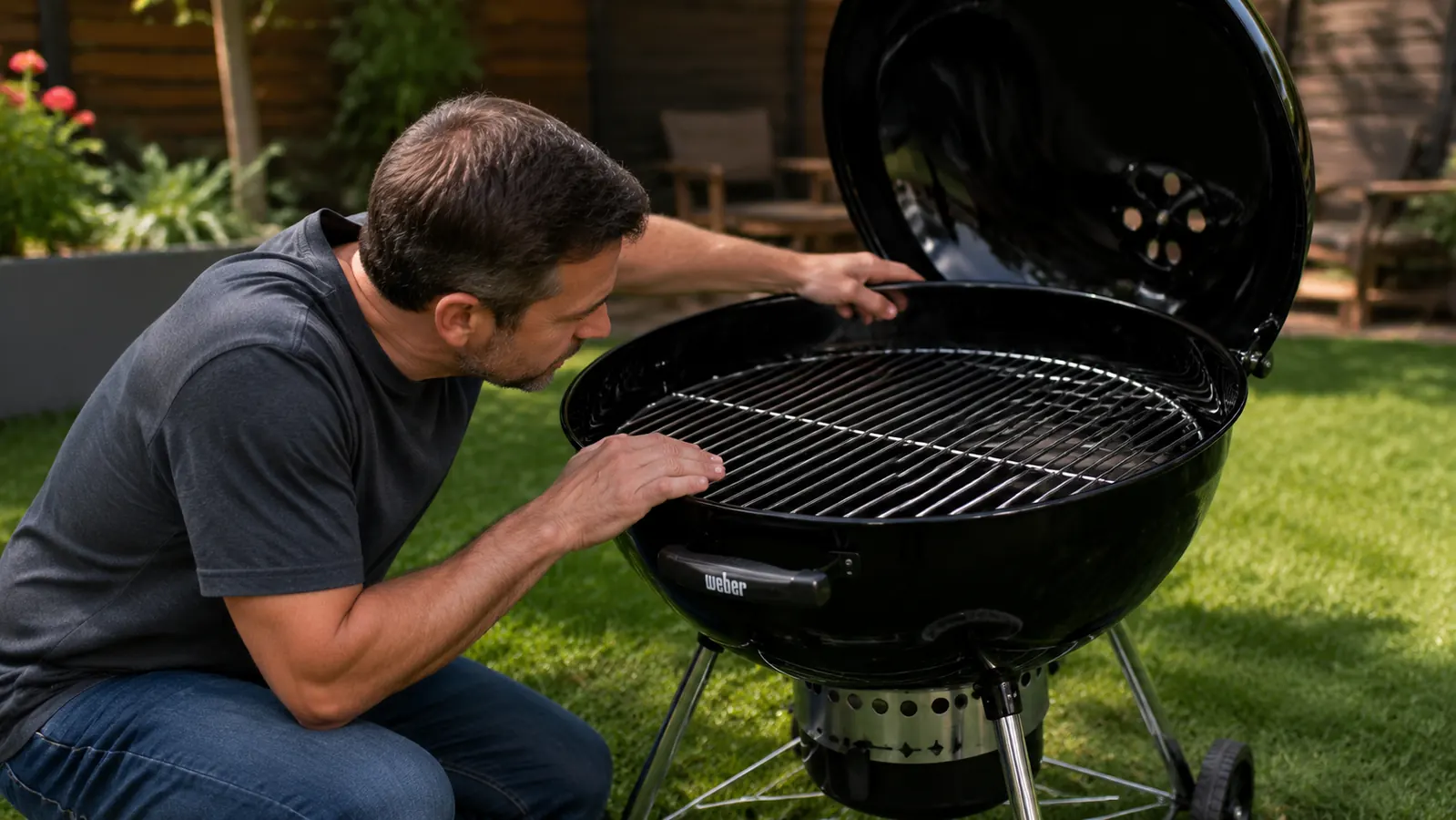
The Weber kettle ships with a plated steel cooking grate. It works. It cooks food. But after a season of regular use, that plating starts to wear in spots and surface rust shows up. This is not a defect or a warranty issue. It is just what happens to plated steel over an open fire. Weber knows this. They sell replacement grates and aftermarket cast-iron inserts that fit the 22-inch bowl. Many serious kettle owners upgrade within the first year and treat the stock grate as a temporary part.
If you plan on owning this grill for a long time, which you probably will, budget for a cast-iron grate upgrade at some point. Cast iron holds heat more evenly, produces better sear marks, and does not rust through with normal care. The Weber Gourmet BBQ System cast-iron center insert and grate ring is a popular upgrade. It will add to the overall cost, so factor it in if you are doing price comparisons with competitors that ship with a better grate stock.
The stock cooking grate is functional, but most serious kettle owners end up upgrading it within the first year. That upgrade cost belongs in your budget from the start.
Gotcha Number Four: 363 Square Inches Sounds Like Plenty Until You Run a Two-Zone Setup
Weber advertises 363 square inches of cooking space. That number is real. It is also somewhat misleading in practice. The reason: any serious charcoal cooking involves a two-zone setup, where your coals occupy roughly half the grill bowl and the other half is your indirect zone. If you want to understand exactly how to set that up on this grill, we have a detailed walkthrough in our guide on how to set up two-zone cooking on a charcoal grill. The point for buyers to understand now is that your usable cooking real estate on a two-zone setup is closer to 180 square inches of reliable indirect space, with the direct zone reserved for quick searing.
For four people that is fine. For a cookout with 10 guests, that becomes a rotating production. You will sear a batch, move it to indirect, sear the next batch, and so on. Experienced kettle cooks do this naturally and it becomes part of the rhythm. But if you are imagining throwing 15 burgers on at once and walking away, that is not this grill. The 26-inch Weber kettle exists for a reason. For most backyard families cooking three or four days a week for a household, the 22-inch is exactly the right size. For someone who hosts regularly and cooks for 10 or more people at once, do the math first.

Gotcha Number Five: Cold Weather Grilling Requires Extra Charcoal
If you live somewhere with real winters and plan to grill year-round, the kettle works in the cold. I have cooked on mine in temperatures below 35 degrees Fahrenheit and gotten good food out of it. But there is a practical issue that nobody's product review mentions because most reviews are written during summer: cold air pulls heat out of the kettle bowl significantly faster than summer air does, and wind makes it worse.
In cold weather you will burn through charcoal faster, your preheat time extends by five to ten minutes, and temperature holding during long cooks gets less predictable. The lid loses heat faster to cold ambient air, which means your damper game has to be more precise. You can compensate by using more charcoal, blocking prevailing wind with your body or a windbreak, and keeping the lid on as much as possible. It is doable and the food is still excellent. But if you compared summer and winter performance without knowing this, you might think something is wrong with the grill. Nothing is. Physics is just doing what physics does.
Gotcha Number Six: Assembly Takes Longer Than the Box Implies
Weber markets this as a quick-assembly grill, and relative to some grills that come in 40 pieces, it is. But I have seen reviews complaining about 45-minute to 60-minute assembly times and that is realistic if you are working alone and take your time to do it right. The legs need to be seated properly in the bottom bowl, the wheel assembly takes a few minutes, and the ash catcher system has to be aligned correctly or the sweeping blades do not rotate smoothly. None of it is complicated. There are no tools provided in the box, so have a Phillips-head screwdriver and an adjustable wrench nearby. If you try to rush it you will get something slightly out of alignment and spend time backtracking.
Weber's instruction manual is adequate, and there are YouTube assembly videos if you want a visual guide. The physical quality of the parts is high enough that there is no real frustration here beyond the time investment. Just plan for an hour and feel good about finishing in 45 minutes rather than plan for 20 minutes and feel cheated when it takes twice that.
What the Reviewers Actually Get Right
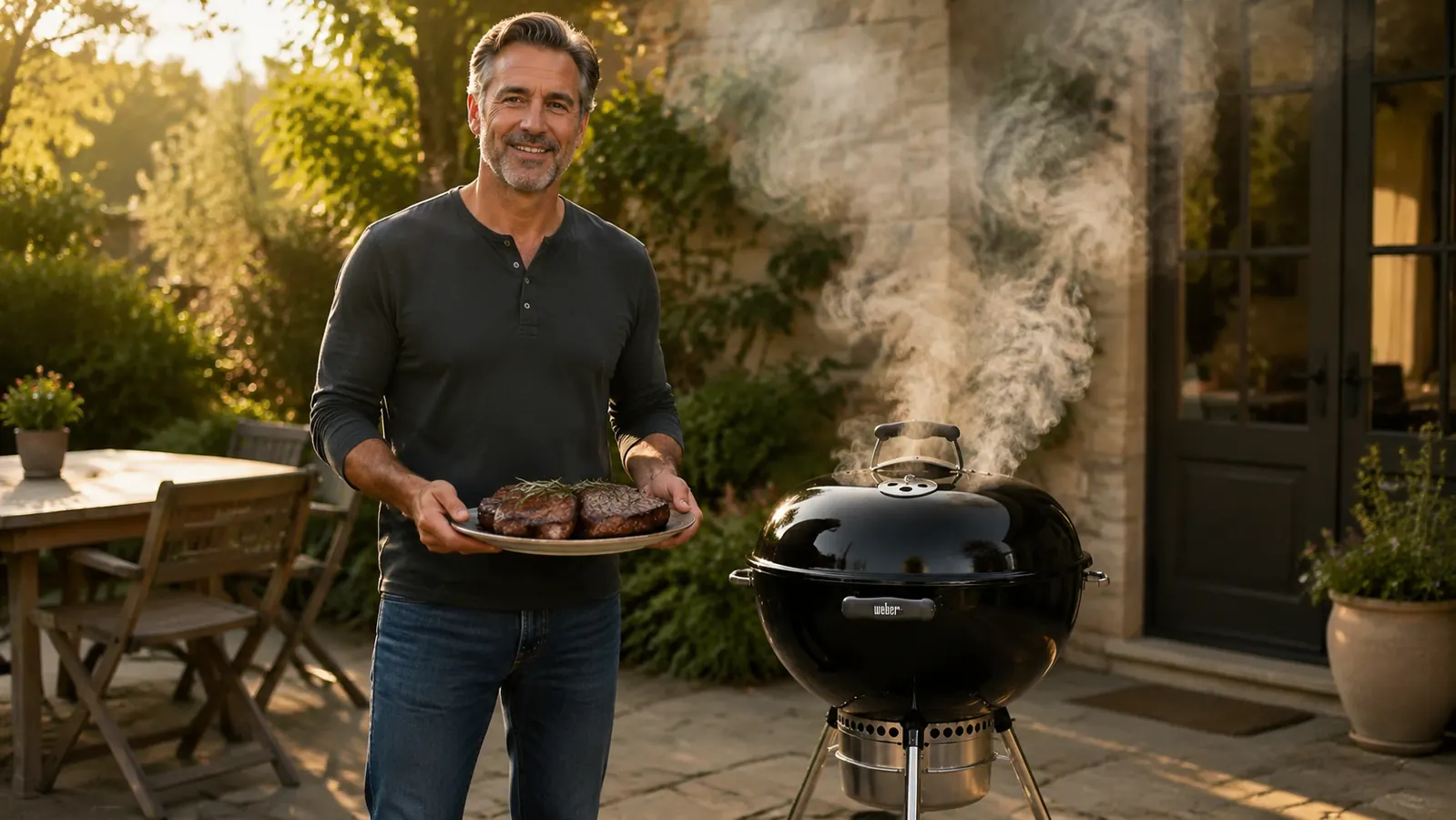
After covering what gets skipped, let me be clear about what the crowd has exactly right. The bowl and lid durability is exceptional. Porcelain enamel on steel, done properly, does not rust and does not chip under normal use. After real outdoor exposure through temperature swings, rain, and high-heat cook sessions, the exterior of this grill looks the same as it did when assembled. Cheaper kettle clones use thinner gauge steel and thinner enamel coatings. You can see the difference after one season outside.
The vent system, once you learn it, gives you a level of temperature control that surprises people coming off gas grills. Bottom vent wide open means hot fire. Bottom vent nearly closed means a slow, steady low-temperature cook. The top vent manages smoke exit and airflow balance. It takes a few sessions to get the feel, but the mechanics are simple and reliable. Weber did not invent this system, but they execute it consistently across every kettle they make.
The 10-year warranty on the bowl and lid is also real and not buried in asterisks. Weber honors it. For a grill that a backyard cook might use 60 to 80 times a year, knowing the core cooking vessel is covered for a decade changes how you think about the purchase.
What We Liked
- Porcelain enamel bowl and lid resist rust and chipping through years of outdoor exposure
- Vent-based temperature control gives precision that rewards learning and holds up across seasons
- 10-year warranty on the bowl and lid is one of the strongest in the charcoal grill category
- Weber replacement parts are widely available, so the grill is repairable rather than disposable
- Works year-round in most climates with appropriate charcoal adjustments
- Assembly quality is high with tight-fitting parts and no flimsy hardware
Where It Falls Short
- Lid thermometer reads 25 to 50 degrees hotter than actual grate temperature, misleading on first cooks
- Ash catcher cup is too small for cooks longer than two to three hours and needs mid-cook emptying
- Stock plated grate develops surface rust over time and most serious owners end up replacing it
- Two-zone cooking cuts the effective cooking space roughly in half, which surprises buyers expecting full 363 square inches
- Cold weather performance requires more charcoal and more attention to maintain consistent temperature
- No tools included in the box, no side shelf on the standard model, so you are building a support setup from scratch
Who This Is For
The Weber 22-inch Premium is the right grill for someone who wants to take backyard cooking seriously and is willing to spend the first season learning how charcoal heat actually works. It rewards patience and curiosity. If you are the kind of person who reads about fire management before you cook, or who wants to understand why food tastes different over charcoal versus gas, this grill will teach you what you want to know. It is also the right call for any household that cooks for two to six people regularly and wants a setup that will last a decade without drama.
Who Should Skip It
Skip it if you want a grill that is ready in five minutes and forgives every mistake. Charcoal has a learning curve and the Weber kettle does not disguise that. If you host large groups of 12 or more people and need to cook everything in one batch, the 22-inch will have you running multiple rounds and stressing out over timing. And if your goal is hours-long overnight smokes at rock-solid temperature without any babysitting, a dedicated pellet smoker or a ceramic kamado will do that job better than any kettle will. The kettle is a hands-on grill. Some people love that. Some people do not want it.
Go in knowing the gotchas and this grill will not disappoint you.
The Weber Original Kettle Premium 22-inch is one of the best-selling charcoal grills on Amazon for good reason. Check today's price before you decide. Availability and pricing change, so it is worth a look now.
Amazon Check Today's Price on Amazon →