

Three seasons ago I set my old gas grill out by the curb with a free sign on it and carried a Weber Original Kettle Premium 22-inch charcoal grill around to the back patio. My neighbor, a guy who has been grilling longer than I have, watched me unbox it and said, "Took you long enough." I figured that was as good an endorsement as any. Since then I have cooked on that Weber grill nearly every weekend from March through October, through three Indiana summers and more chickens, briskets, pork shoulders, and reverse-seared ribeyes than I can count. This review is what I actually know about it, not what the box says.
The Weber 22-inch Premium (ASIN B00MKB5TXA) carries a 4.8-star rating across more than 12,000 Amazon reviews. Numbers like that usually mean the product is either genuinely good or the crowd has lost its mind. In this case it is the former. But there are real limitations worth knowing before you hand over the money, and I will cover those too.
The Quick Verdict
The Weber 22-inch Premium is the most reliable, versatile, and well-built charcoal grill at this price. After three full seasons of heavy weekend use it still cooks as well as day one. The only things I wish were different are the cooking area size for larger crowds and the ash catcher, which fills faster than you'd expect on long cooks.
Amazon Check Today's Price →Still debating a gas grill? Read this first, then check current price on the Weber.
The Weber Original Kettle Premium 22-inch is consistently one of the best-selling charcoal grills on Amazon. Price fluctuates, so check what it is today before you decide.
Amazon Check Today's Price on Amazon →How I Have Used It Over Three Seasons
I am not a competition pitmaster. I am a backyard griller in central Indiana who cooks for my family on weekends and for a small crowd every few months when the neighbors come over. My typical cook on the Weber is a two-zone setup: coals banked to one side for searing, the other side open for indirect. On longer days I do low-and-slow work with the vents dialed way down, a water pan set on the indirect side, and the lid on for two or three hours at a time. I have done bone-in pork shoulders over six hours, full spatchcocked chickens, whole fish wrapped in foil, skirt steak, and more than a few batches of corn that turned out better than anything I have made on a gas grill.
During the first season I was still learning how to manage charcoal heat on this specific bowl shape. By season two I had the vent rhythm down cold. By season three it felt like second nature. That learning curve is real, but it is not steep, and it is part of why charcoal grilling produces better results than gas over time. You start to understand fire.
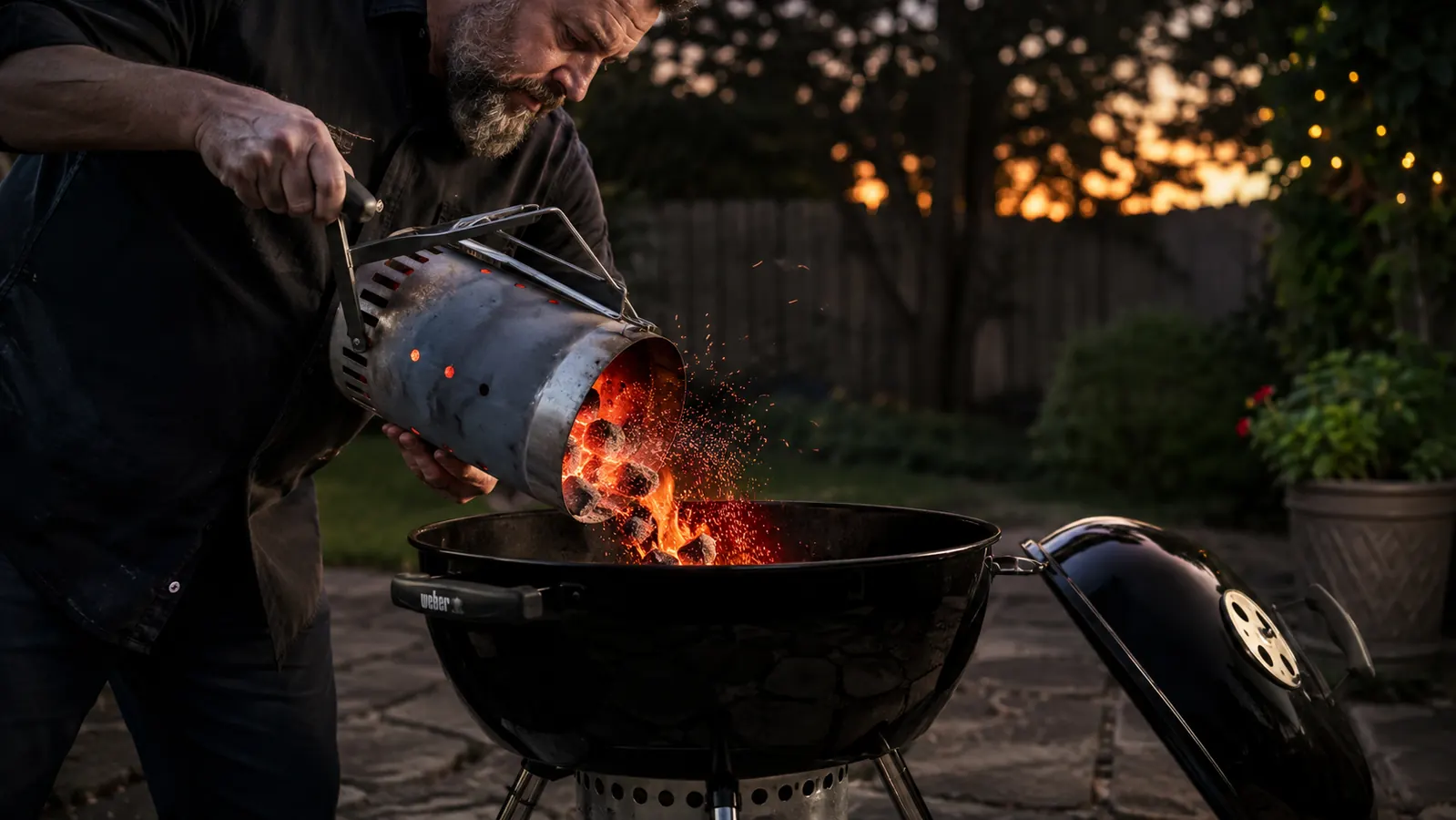
I used the Weber chimney starter to light it every single time. No lighter fluid, ever. If you do not have a chimney starter already, budget for one alongside this grill. The two belong together. I fill it with Kingsford briquettes, set a single piece of newspaper underneath, light it, and the coals are ready in about 12 to 15 minutes. That is faster than waiting for a gas grill to pre-heat properly, and there is no chemical smell.
Build Quality and Materials: What Three Seasons Actually Tells You
The porcelain-enameled bowl and lid are the heart of the Weber kettle's durability story, and after three years of outdoor exposure in a climate with real winters and humid summers, they still look the same as the day I bought this. No rust, no chipping, no warping. Weber's porcelain enamel is thick enough to actually matter. I have seen cheaper kettle-style grills rust through the bottom bowl in two seasons. That does not happen here.
The plated steel cooking grate is a different story. It is functional and serviceable, but after season two I noticed some surface rust in spots where the plating had worn. The grate still works fine, but I cleaned it thoroughly and added a light coat of cooking oil before storage each fall. Weber sells replacement grates separately, and they are reasonably priced. This is not a defect so much as the reality of using steel over an open fire.
The legs are solid, the wheels roll easily, and the One-Touch cleaning system at the bottom is genuinely useful. Three swept blades rotate through the ash pile and knock everything into the ash catcher below. It makes cleanup dramatically easier than grills that require you to scoop ash by hand. My one complaint here: the ash catcher is small. On a four-hour cook it fills up. If you plan on long sessions, check it mid-cook rather than at the end.
Temperature Control: The Built-In Thermometer and the Damper System
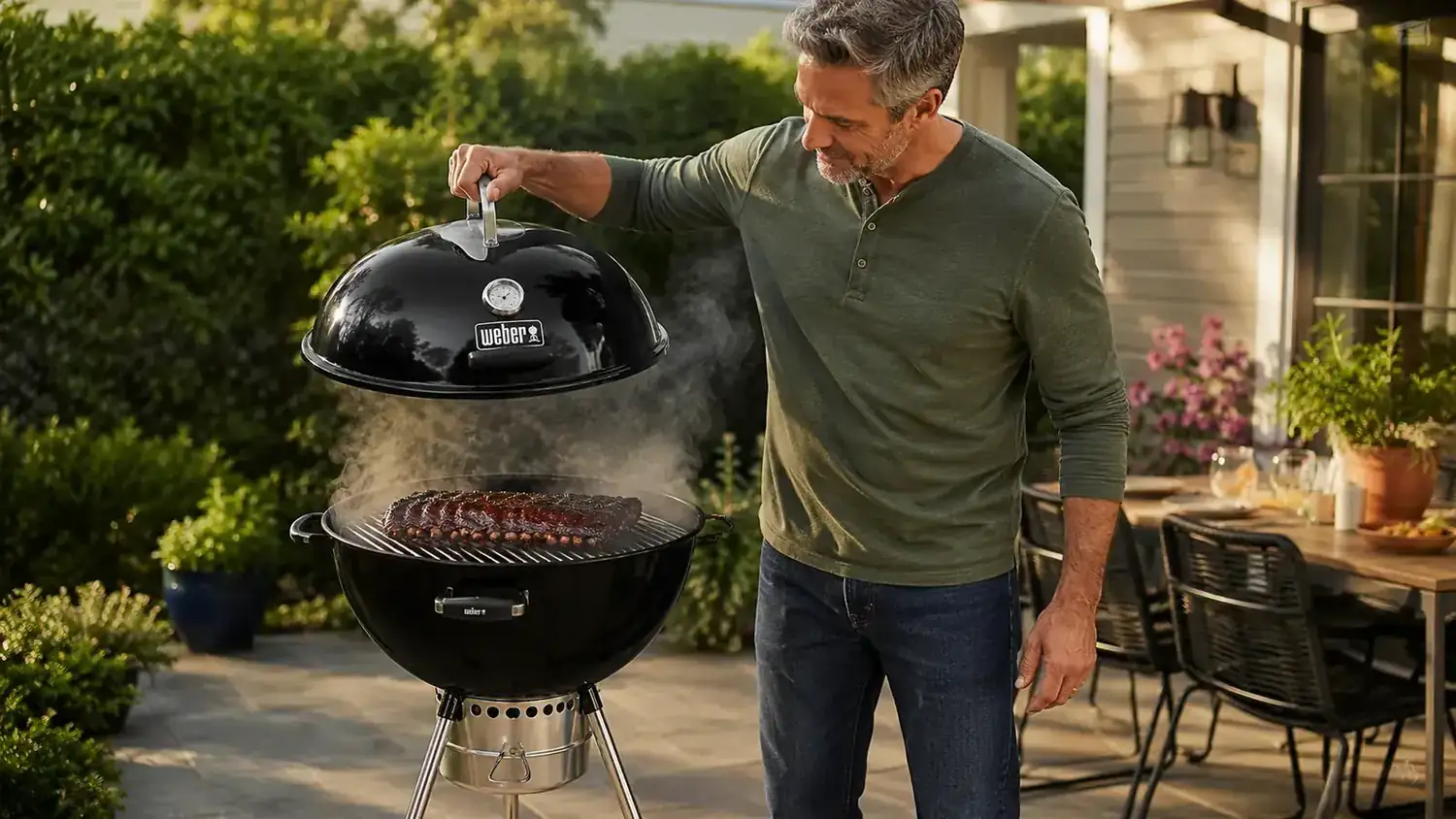
The lid thermometer reads grill temperature at lid level, which runs about 25 to 40 degrees hotter than grate level. That matters. If you are doing low-and-slow work targeting 225 to 250 degrees at the grate, the lid thermometer will show you 260 to 275. Account for that difference and the reading becomes useful. Ignore it and you will run your cook too hot without realizing it.
The real temperature control on this grill comes from the two dampers, top and bottom. The bottom vent controls oxygen to the coals, which controls burn rate and heat output. The top vent manages airflow out and smoke movement. I typically run both at about half-open for a moderate two-zone cook, then dial the bottom nearly closed when I want to hold a low temperature for a long period. Once you spend a few sessions getting a feel for how your particular charcoal load responds to vent position, this system gives you more consistent temperature than most backyard gas setups.
The damper system on this grill gives you more temperature control than most people expect. Once you dial it in, you stop missing the gas knob.
Cooking Space and Real-World Capacity
The 22-inch cooking grate gives you 363 square inches of total cooking space. That is enough for about 13 burgers, a whole chicken with room on the sides, or a full rack of baby back ribs laid flat. When I run a two-zone setup, the actual usable indirect zone shrinks to roughly half that area, so plan accordingly for large groups.
For a household of four or a group of six or seven adults, the capacity is right. If you are hosting 15 people and want to cook for all of them at once, you will be doing multiple batches. That is the one honest limitation of a 22-inch kettle. Weber makes a 26-inch version if you need more real estate, but it costs more and takes up more storage space. Most backyard cooks never outgrow the 22.
Long-Term Performance: What Changed After Year One, Two, and Three
After year one: the grill cooked exactly as advertised. Nothing to report except that I wished I had bought it sooner.
After year two: I replaced the cooking grate with a new Weber cast-iron grate I found on sale. The upgrade was noticeable in sear marks and heat retention. The original plated grate went in the garage as a backup.
After year three: I cleaned the ash catcher track, re-seasoned the grate, and inspected the bowl interior. There is some minor discoloration inside from high-heat cooks, which is normal. The porcelain enamel on the exterior still looks clean. The bottom damper mechanism stiffened slightly from carbon buildup and needed a good scrub with a wire brush before season three. Twenty minutes of maintenance and it was back to smooth operation. That is the sum total of maintenance I have done in three years of regular use.
Weber backs this grill with a 10-year warranty on the bowl and lid, a 5-year warranty on plastic components, and a 2-year warranty on everything else. In three seasons I have never needed to use it. But knowing it exists makes the price easier to justify.
What I Added to This Setup Over Time
The grill ships with what you need to cook, but there are a handful of additions that genuinely improved my results over three seasons. A good instant-read thermometer is the biggest one. I stopped guessing doneness on thick cuts and started hitting target temperatures consistently. Pull a pork shoulder at 203 degrees internal and it comes apart exactly right every time. Without a thermometer you are just hoping.
A set of long-handled stainless steel grill tools also made a real difference for safety and control. The Weber comes with hooks on the outside of the bowl for tool storage, which is a nice touch, but it does not include any tools in the box. A decent spatula, tongs, and a basting brush are worth having before your first cook. Beyond that, a couple of wood chunks dropped in with the coals add smoke character to low-and-slow cooks without any extra equipment at all. Hickory for pork, cherry for chicken, apple for ribs. That is the whole setup.
How It Compares to What Came Before and After
Before this Weber I had a gas grill for eight years. Before that I had a cheap offset smoker that rusted through in two seasons. The gas grill was convenient but the food always tasted like what it was: gas-grilled food. The charcoal kettle changed that. Steaks taste like steaks. Chicken has actual smoke flavor even on a 45-minute cook. The difference is real, not just in my head.
I have grilled at friends' houses on a kamado-style ceramic grill, which is a legitimate competitor at a much higher price. The kamado holds temperature better in cold weather and handles very long smokes more efficiently. But it costs two to four times as much and weighs considerably more. For most backyard cooks, the Weber kettle does 90 percent of what a kamado does at a fraction of the price. If you want to dig deeper on that comparison, I put together a full breakdown in the Weber Kettle vs Kamado Grill piece.
On the charcoal vs gas question, I wrote about that too. The short answer is that charcoal wins on flavor and versatility for anyone willing to spend an extra 15 minutes on the lighting process. The full reasoning is in 10 Reasons a Charcoal Grill Beats Gas.
What We Liked
- Porcelain enamel bowl and lid show zero rust after three seasons of outdoor use
- Damper system gives precise temperature control once you learn the rhythm
- 10-year warranty on the bowl and lid, which is unusual at this price
- One-Touch ash cleaning system is genuinely useful on short and medium cooks
- Versatile enough to sear, indirect cook, and do basic low-and-slow smoking all on the same setup
- Cooks charcoal-flavored food that no gas grill at any price fully replicates
Where It Falls Short
- Ash catcher fills quickly on cooks longer than three hours
- Original plated grate develops surface rust over time and benefits from replacement after a season or two
- 363 square inches is the right size for a family of four but limiting if you regularly cook for larger groups
- Lid thermometer reads high relative to grate level, which trips up new charcoal grillers
- No shelf or side table included on the standard model, so you need a separate surface for tools and plates
Who This Is For
This grill is the right call for backyard cooks who want one reliable charcoal setup they can learn deeply and use for years. It is the right call for people who regularly cook for two to six people and want genuine fire-cooked flavor without spending $500 or more on a ceramic cooker. It is the right call for anyone who is serious about improving on the grill and wants a platform that rewards learning. The Weber kettle is also a great first dedicated charcoal grill if you are coming off a gas setup and want to understand what the fuss about charcoal is actually about.
Who Should Skip It
If you are cooking for 12 or more people on a regular basis and need to do it in one batch, the 22-inch will feel cramped. You would be better served by the Weber 26-inch or a full-size offset smoker. If you want to do 12-hour overnight smokes on a consistent basis and need rock-solid temperature stability without babysitting, a kamado or a dedicated pellet smoker will handle that better than a kettle will. And if you genuinely do not have 15 to 20 minutes for the lighting process and just want to spin a knob and start cooking, a gas grill still makes sense for that life. No shame in it.
Three seasons in, I would buy this exact grill again without hesitating.
The Weber Original Kettle Premium 22-inch is available on Amazon with free shipping on most orders. The price moves occasionally, so check what it is sitting at today before it changes.
Amazon Check Today's Price on Amazon →