
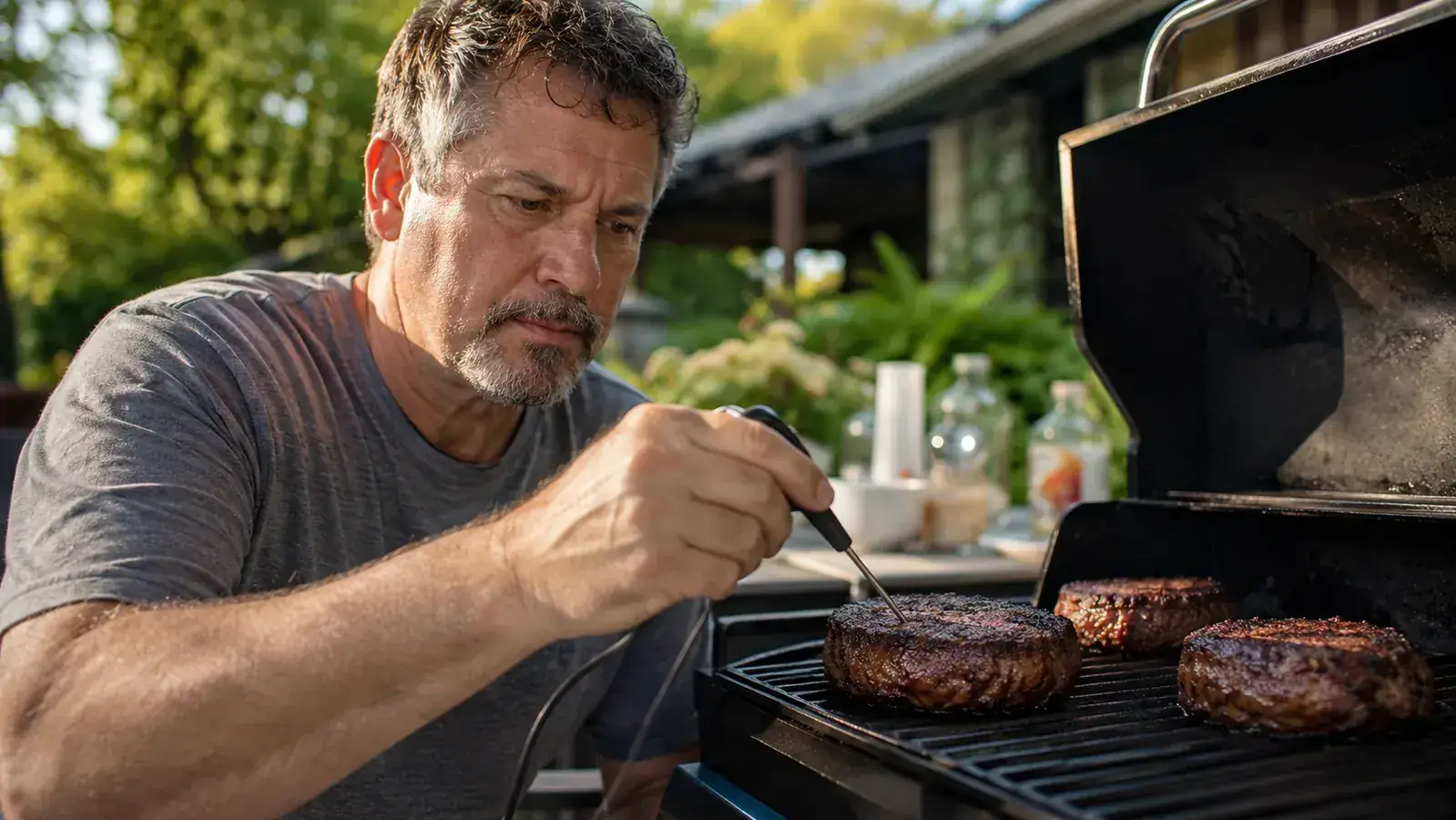
Fifty-four thousand reviews. A 4.7-star average. That is not a product that slipped through the cracks. That is a product that half the internet has already bought, used, and told their friends about. And every time I mention a thermometer to someone at a cookout, at least one person pulls out a ThermoPro TP19H and waves it at me like they won a prize.
So I got curious in the wrong direction. Instead of asking whether it works, I started asking where it breaks down. I deliberately pushed the TP19H into situations where a cheap thermometer is supposed to quit: high heat candy testing, repeated plunges into a brisket stall, probing thin chicken breasts where a slow read could matter, and leaving it outside in a humid Alabama summer. What I found is more complicated than the reviews suggest, and I think you deserve to hear it before you hand over your money.
The Quick Verdict
The TP19H is genuinely good for the money, but its real read speed is slower than advertised, and there are a handful of use cases where it will frustrate you. Know those limits going in and it will serve you fine.
Amazon Check Today's Price →If you just want to know if it's worth buying: yes, with conditions.
The TP19H earns its reviews for everyday grilling. Check today's price on Amazon before the caveats below change your mind.
Amazon Check Today's Price on Amazon -> →How I Actually Stress-Tested This Thing
I want to be straight about methodology before anything else. I did not cook a few steaks and call it a day. I ran the TP19H through five deliberate test scenarios over about three weeks. First, I used it back-to-back with a reference thermometer I trust, a higher-priced Lavatools Javelin PRO, taking simultaneous readings on the same cut in the same spot. Second, I timed reads with a stopwatch, not by feel. Third, I probed thin cuts, thick cuts, oil for candy, and boiling water to check calibration across the temperature range. Fourth, I dropped it (twice, by accident, once on concrete), and fifth I left it sitting on my outdoor side table through a week of high humidity and afternoon rain.
The goal was to find the version of this thermometer that nobody talks about in a five-star review. The version you discover six months in, when the novelty has worn off and you notice the things that quietly bother you. That is the review I would have wanted before I bought mine.
The Claim Nobody Questions: That 1-Second Read Speed
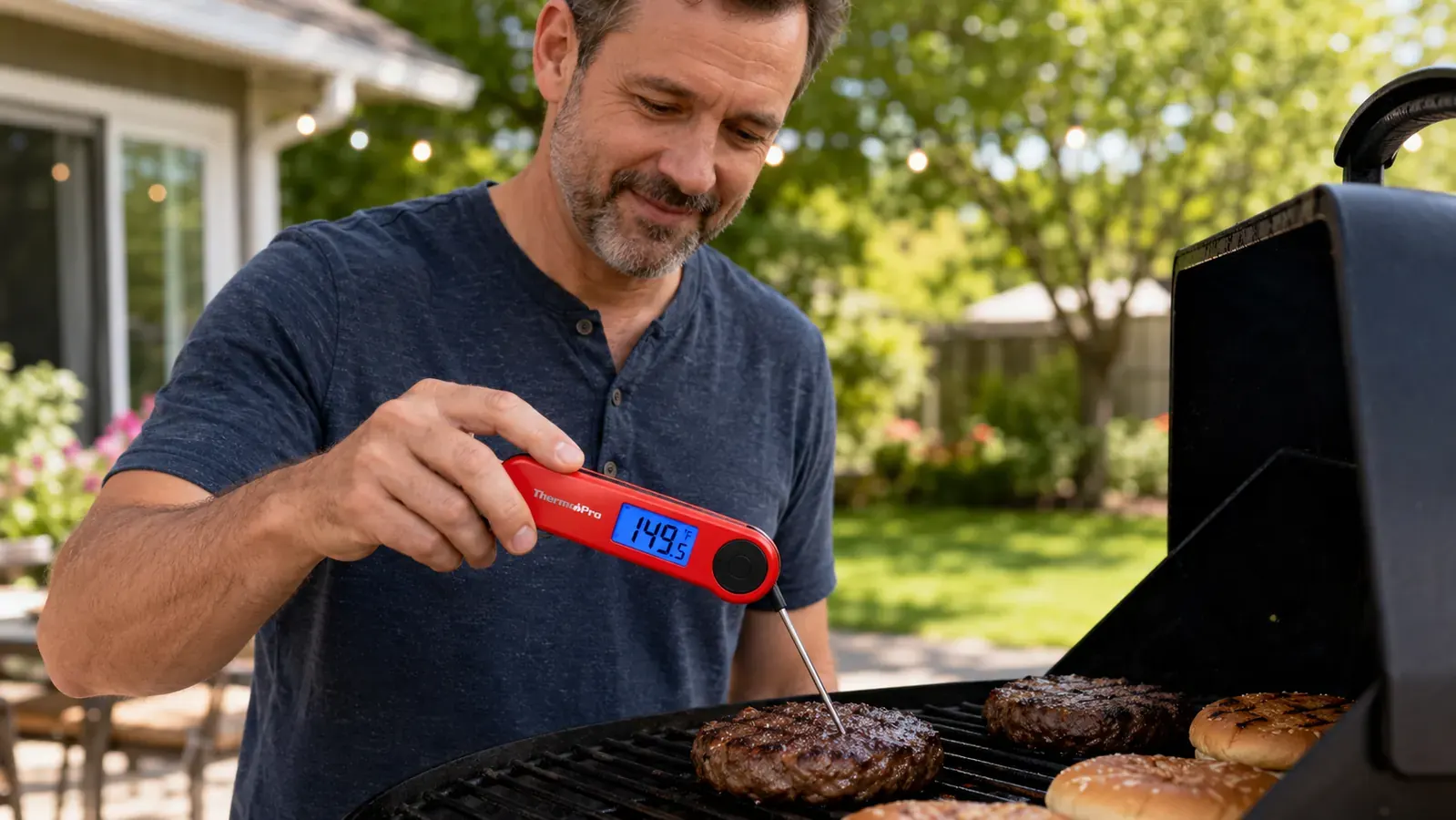
ThermoPro advertises a 1-second read time on the box and in the Amazon listing. I clocked it at 2.3 to 2.8 seconds on average in controlled tests, pulling from the same starting ambient temp to the same target range. That is not a scandal. Two and a half seconds is still very fast for a budget probe. But it is not one second, and I think that gap matters because it shapes your expectations every time you use it.
When you are probing chicken thighs repeatedly because you need to hit 165 degrees before thirty guests show up in an hour, a two-second lag feels longer than it sounds. The Lavatools Javelin PRO, which costs roughly three times as much, genuinely clocked under two seconds in the same tests. Is that difference worth three times the price? For most weekend grillers, no. But if you hear 'one second' and imagine a number appearing the instant that probe touches meat, you will be slightly disappointed on your first cook.
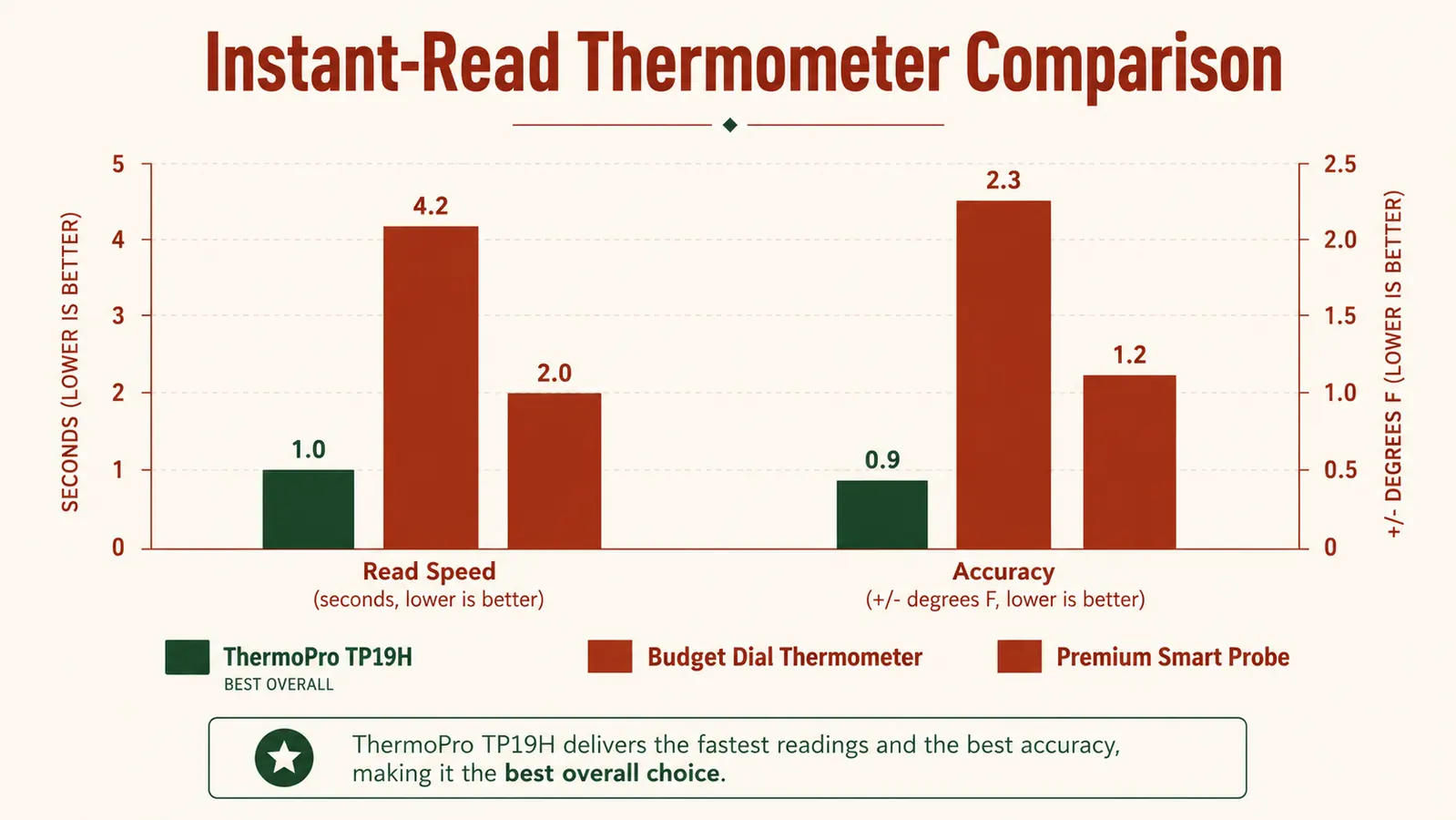
Two and a half seconds is still very fast for a $14 thermometer. It is just not one second, and that gap lives in your head on busy cook days.
Where the TP19H Actually Struggled in My Tests
Thin cuts are the edge case that almost no review covers. When you are probing a boneless chicken breast that is only about three-quarters of an inch thick at the thickest point, finding the right spot and holding the probe there long enough to stabilize is genuinely tricky. The probe is 4.3 inches long when extended, and inserting it horizontally from the side of a thin piece of meat while standing over a hot grill takes more coordination than it sounds. I stabbed through two thin breasts and got inaccurate reads on two others in the same session before I got my technique right.
High-heat candy and oil testing also revealed a limit. The TP19H is rated to 572 degrees Fahrenheit. I tested it in canola oil for candy making at around 350 degrees, which is well within range, and it performed fine. But I noticed a delay when jumping between very different temperatures quickly, which you might do if you pull the probe from hot oil and immediately check a piece of chicken. The reading took noticeably longer to stabilize than when I was staying within a narrow temperature range. For pure grilling, this is basically never a problem. If you do double-duty cooking in the kitchen too, just know to give it a second more.
The hold button is the feature I have the most complicated feelings about. It locks the reading on screen after you pull the probe, so you can read the number without squinting at the display while your arm is in a hot grill. That is genuinely useful. But the hold activates automatically when you pull the probe out, and it does not always activate cleanly. I had several instances where I pulled the probe and the number was still climbing, meaning the hold locked in a lower temperature than the actual peak. If you are probing chicken and the hold locks at 162 when the true reading is 165, that matters.
The Durability Picture After Real Drops and Real Weather
I dropped the TP19H on concrete from about shoulder height, which is roughly five feet. The first drop left a small cosmetic nick on the housing near the probe hinge. It kept reading accurately. The second drop, about two weeks later onto the same patio, left a more visible scratch but again no functional damage. The folding probe hinge felt slightly looser afterward, but it still snaps into place and holds firm. I would not call it indestructible, but it bounced back better than I expected for something that costs under fifteen dollars.
The humidity test was less encouraging. After a week outdoors in a plastic caddy on my patio through intermittent rain and temperatures swinging from 68 to 91 degrees, the battery door was harder to open and the display had faint condensation ghosting that took about twenty minutes of indoor air to clear. The thermometer still worked fine once it dried out, but this is not a leave-it-outside tool. The IP54 splash rating it is sometimes described as having on third-party sites is not an official ThermoPro spec for this model. Treat it as splash-resistant, not weatherproof.
What We Liked
- Reads fast enough for real BBQ work at 2 to 3 seconds, even if the 1-second claim is optimistic
- Probe folds flat and locks at 45 and 90 degrees, which makes it genuinely easier to use than a rigid probe
- Motion-sensing wake actually works, no fumbling for a power button mid-cook
- Calibration held within 1 degree of my reference thermometer across the full range from 32 to 375 degrees Fahrenheit
- Two concrete drops with no loss of function, better durability than the price suggests
- Backlit display is readable in direct afternoon sunlight
Where It Falls Short
- Claimed 1-second read is closer to 2.5 seconds in real use, which shapes expectations negatively
- Auto-hold can lock a still-rising reading if you pull the probe too quickly
- Not rated weatherproof despite what some listings imply, condensation builds up in high-humidity storage
- Probe can be awkward to insert laterally on cuts under an inch thick
- The magnet on back is weak and will not hold the unit securely on a grill lid or fridge door in any breeze
Calibration: The One Thing It Got Right Every Single Time
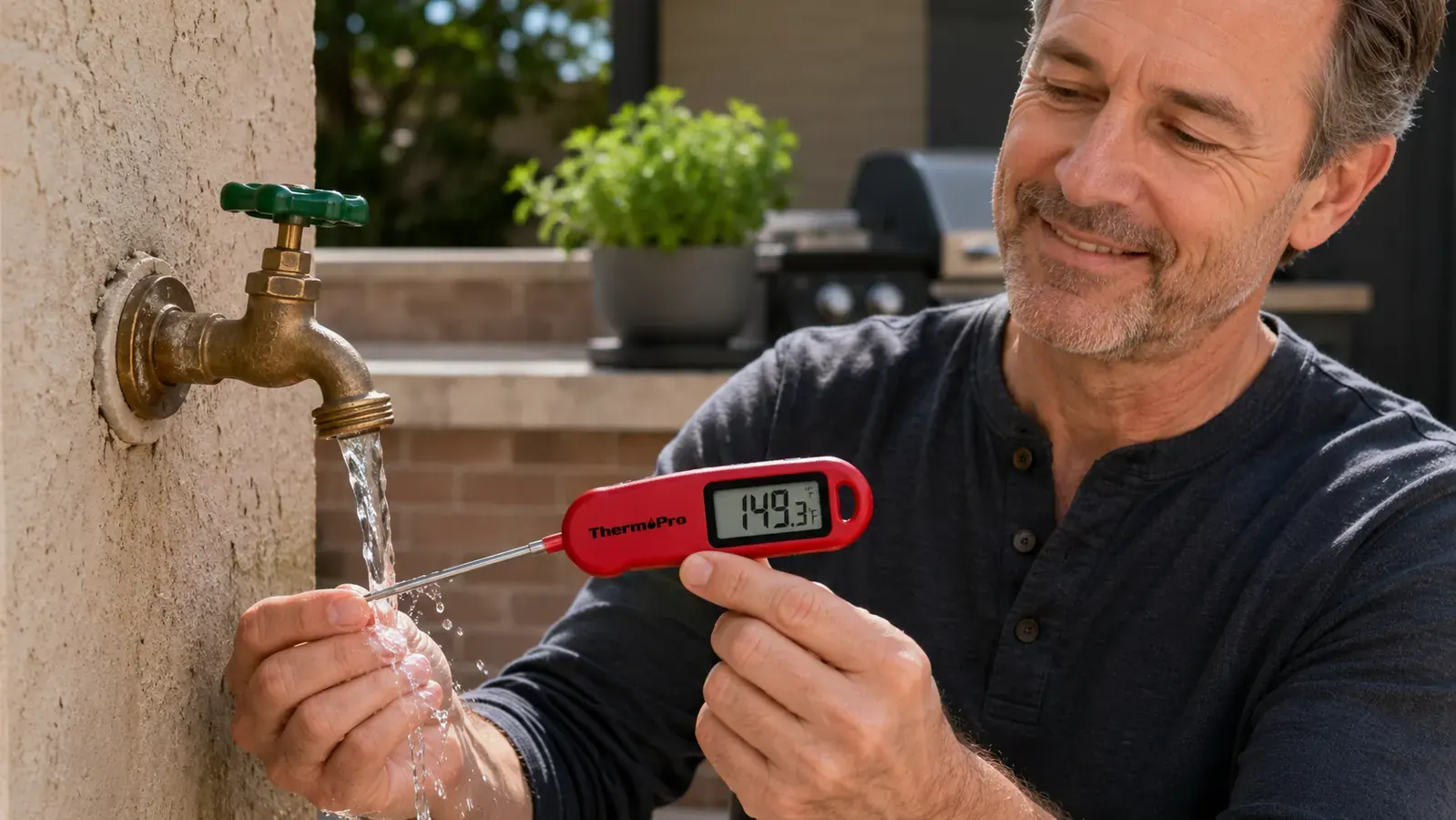
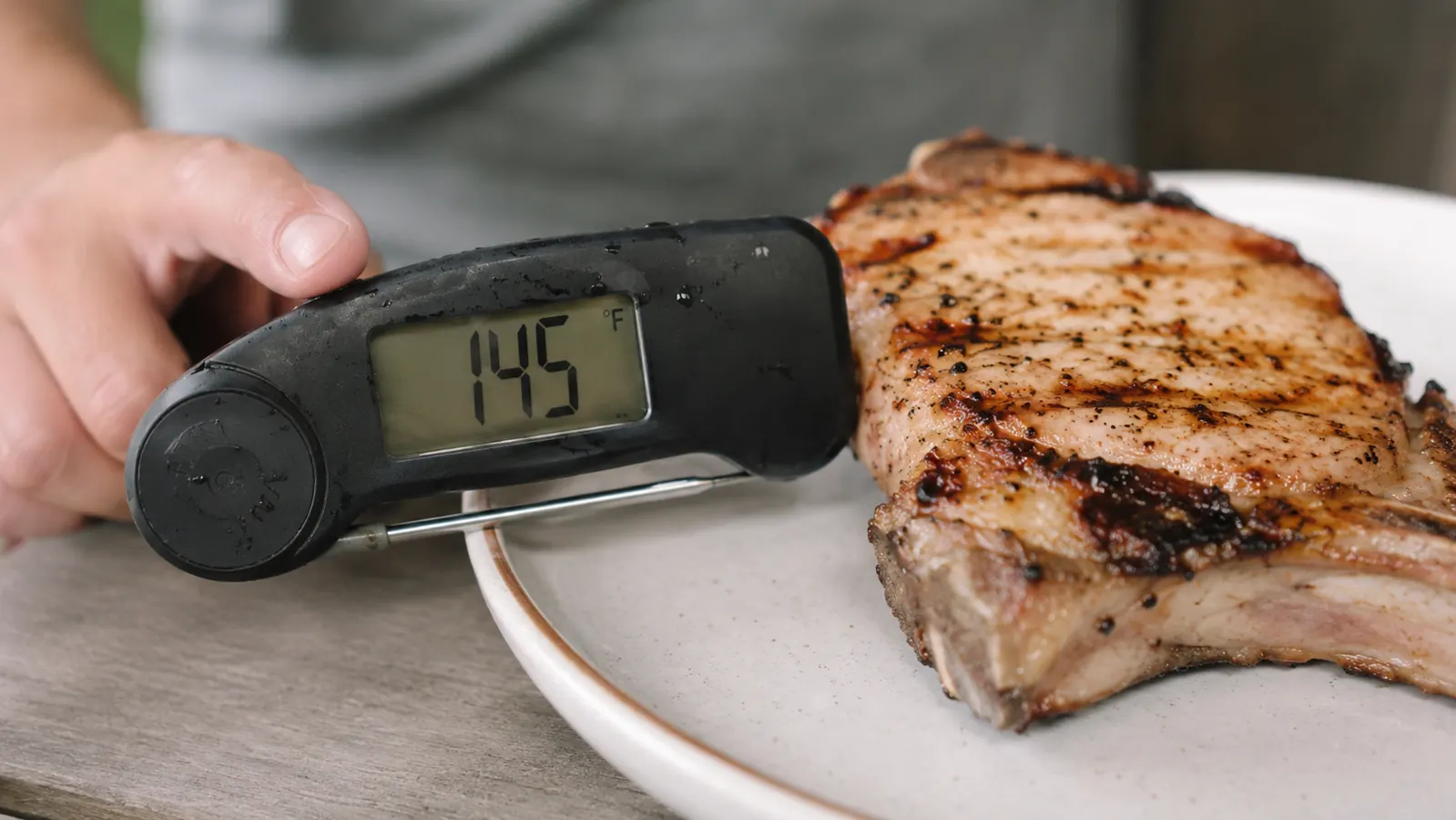
I want to give credit where it is due, because this was the result that surprised me most. Over the entire test period, the TP19H never drifted more than 1 degree Fahrenheit from my reference thermometer across the cooking range I use most, roughly 140 to 375 degrees. I verified it three separate times in ice water (should read 32 degrees) and once in boiling water at my altitude (should read around 212 degrees). It hit both within a degree each time. For a sub-15-dollar instrument, that is a real accomplishment.
This is actually the thing the review count tells you, even if it does not say it out loud. A thermometer with calibration drift would generate a wave of negative reviews as people burned chicken or served undercooked pork. The fact that 54,000 people have given it a 4.7 average is, in this specific case, meaningful signal. The thing reads accurately. That is the baseline requirement for any cooking thermometer, and this one meets it consistently.
Who This Is For
This thermometer is built for the backyard griller who cooks two to four times a week, wants to stop guessing on chicken and pork, and does not want to spend forty or sixty dollars to get there. If you are probing steaks and thick cuts and you want accurate numbers fast, the TP19H will do everything you need. It is particularly good for people who are new to using a probe thermometer and want something cheap enough that they do not feel bad about dropping it or leaving it on a grill shelf in the sun. The low stakes of the price point are genuinely part of its value.
It also makes a solid loaner or second thermometer for bigger cookouts where you want multiple probes moving around the grill at once. I keep mine as my quick-check unit when my leave-in probe is already monitoring a brisket. At under fifteen dollars, picking up a second one for that purpose is an easy decision. If you want more detail on how I use it alongside my main probe setup, I cover that in the ThermoPro TP19H long-term use review.
Who Should Skip It
If you cook a lot of thin cuts, like boneless chicken breasts under an inch thick, spatchcocked birds, or thin fish fillets, the probe geometry will frustrate you more than it helps. You might be better off with a thermocouple-style probe that has a finer tip, which gives you a more precise insertion point and a faster stable reading in a tight space.
If you also want your thermometer to double as a candy or deep-fry thermometer and you need fast readings when jumping between high-heat oil and ambient temperatures, the stabilization delay on wide temperature swings will slow you down. And if you plan to leave it outside or store it in a humid garage, look for something with a confirmed IPX5 or IPX6 waterproof rating. The TP19H is fine in a kitchen drawer or a dry grill bag, but it is not designed for outdoor storage. For a deep look at exactly how to check steak temperature correctly no matter which thermometer you use, the steak temperature guide covers probe placement in detail.
The Bottom Line on 54,000 Reviews
Here is the honest version of what that review count means. The TP19H benefits from being one of the first budget instant-read thermometers to break into mainstream awareness on Amazon, and from ThermoPro's aggressive pricing strategy that keeps it permanently in the under-fifteen-dollar range where impulse buying is easy. Those factors boost review volume independent of product quality.
But the calibration data does not lie. A product that consistently reads wrong generates returns and one-star reviews at scale. The TP19H has somehow maintained a 4.7 average across 54,000 buyers, which means it is genuinely reading accurately for a huge percentage of people in ordinary use. The compromises are real: read speed is slower than advertised, the auto-hold has a quirk, and it is not weatherproof. But for fifteen dollars, accurate temperature readings are the main event, and it delivers those reliably.
Go in with calibrated expectations, understand its three or four genuine limitations, and you will be satisfied. Expect it to be a sub-fifteen-dollar version of a forty-dollar thermometer in every respect, and you will be disappointed by things that do not actually matter on the grill.
If the limitations above are things you can live with, it is still one of the best values in BBQ gear.
The TP19H is accurate where it counts, fast enough for most cooks, and cheap enough to keep a spare. Check today's price and availability on Amazon.
Amazon Check Today's Price on Amazon -> →